

May was an exciting month at SixSense as we saw strong outcomes from AI deployments across advanced packaging and wafer fabs. AI is now helping improve yield, accelerate inspection workflows, and solve process issues much faster than before.
In this month’s edition, we highlight how an advanced packaging line at a leading OSAT is using SixSense AI-ADC to classify millions of inspection images with zero escapes and still >99.8% yield. We also saw growing adoption of AI-powered root cause analysis, where fabs are using AI to quickly connect defect patterns to process tools, chambers, and process conditions.
Alongside these milestones, SixSense was featured at SEMICON Southeast Asia 2026 and ASMC 2026, where industry leaders discussed how AI is becoming an increasingly important part of yield engineering and process control in semiconductor manufacturing.
SixSense AI-Auto Defect Classification in Advanced Packaging
Yield >99.8%. Zero escapes. >90% of the review load automated by AI
At a leading OSAT running high-volume Bumping and RDL inspection, SixSense classifies millions of images in a month across 100s of devices with the customer's own defect engineers running the workflow end to end. New models go live in under a week. New defects get flagged, and do not cause escape. There have been zero end-customer complaints on AI-classified lots since deployment.
With SixSense, the lot hold time is reduced by 55% and classification consistency is at a remarkable 99.99%. The AI system has been reviewed by the customer's end customers too as part of their incoming quality audits and is now the standard check for each inspection layer on the line.
Read More
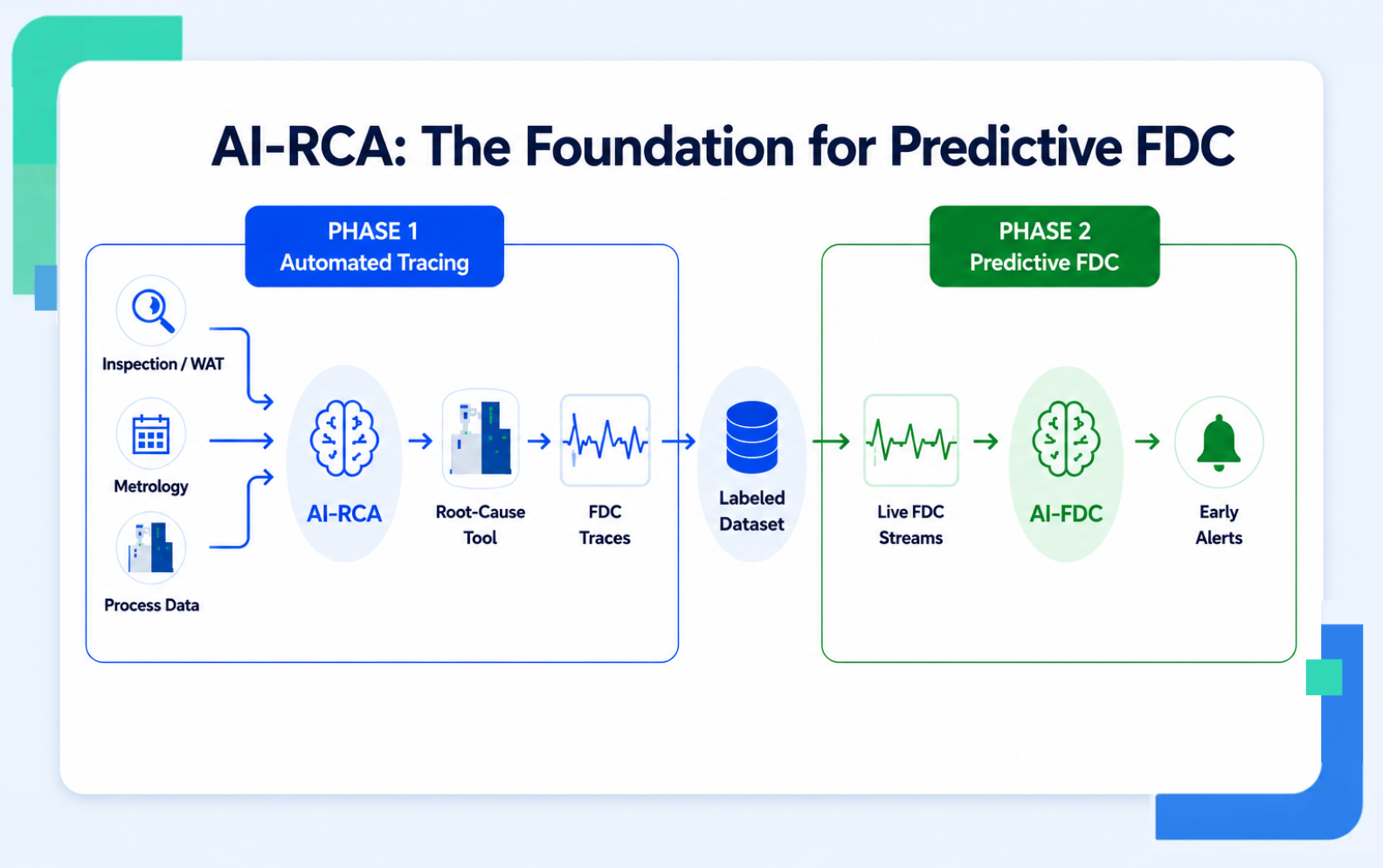
AI-RCA is laying the foundation for next generation of AI-FDC
AI-powered root cause analysis at inspection and WAT is becoming a powerful capability in advanced fabs. It allows engineering teams to trace yield and defectivity issues back to likely process tools, chambers, or process conditions in minutes instead of days. Early deployments are already showing measurable improvements in fab KPIs such as mean time to containment (MTTC), yield exposure per excursion, and engineering and process tool productivity.
Beyond the immediate ROI, this system is also creating the data foundation needed for predictive AI-FDC. It generates structured links between defects, wafer signatures, process tools, chambers, recipes, and FDC signals building the contextual knowledge layer required for earlier and more intelligent detection using FDC signals. If you're working on yield, defectivity, or process control, we’d be glad to discuss what adoption could look like for your line.
Read Full Blog
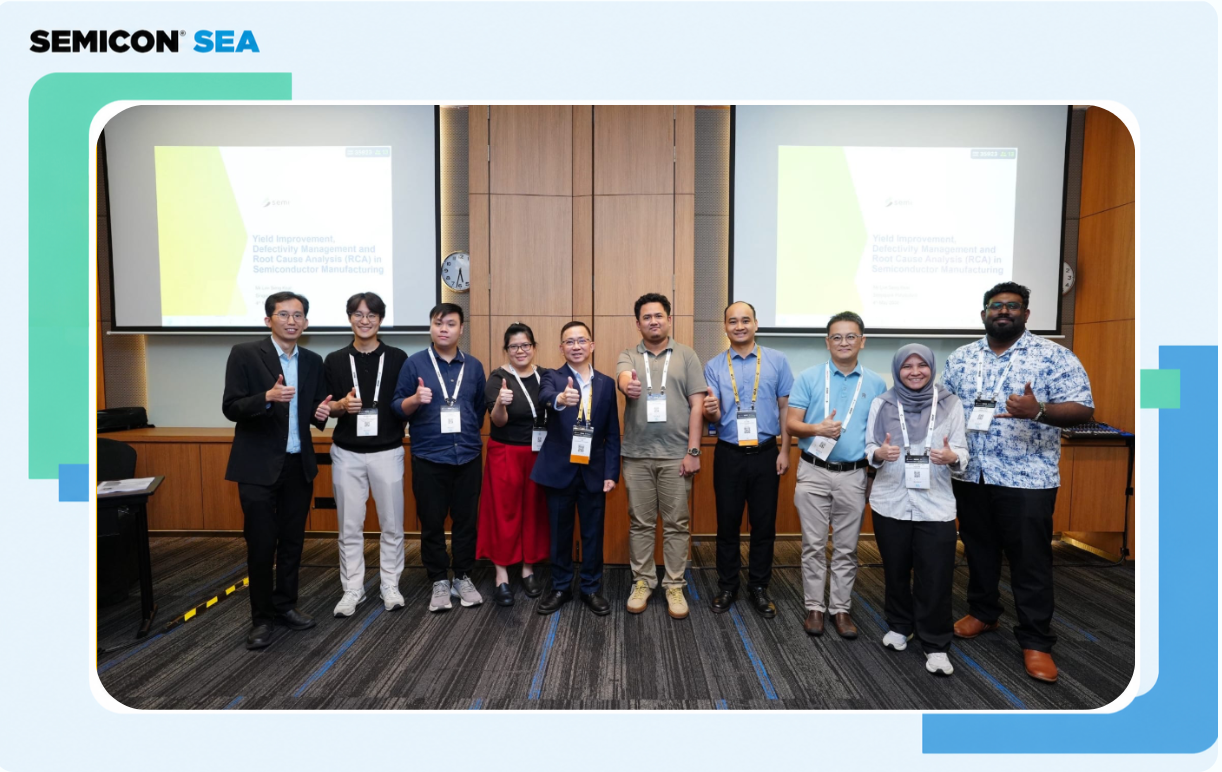
SixSense at SEMICON SEA 2026
At SEMICON Southeast Asia 2026 in Kuala Lumpur (5–7 May), Seng Keat Lim, former Yield Director at GlobalFoundries, spoke about how SixSense AI is changing the way fabs work.
AI that started by classifying defects faster has now moved upstream to catch process problems faster, and help engineers figure out why a problem is happening.
Our newly launched AI-RCA points directly to the tool, step, or the combination of factors behind an excursion, by instantly connecting defect patterns on the line to the conditions that caused them. Root cause analysis that took days now takes a fraction of the time. Having someone who has run yield at one of the world's leading foundries talk about our technology at a global event was a proud moment for us.
SixSense at ASMC 2026
ASMC (Advancing Semiconductor Manufacturing Excellence) 2026, was a great forum to meet people from across France, Taiwan, Singapore, and Albany, all in one afternoon and to learn about the common challenges across the industry. It was encouraging to hear different fabs putting forward the same problem: tracing defects back to the tool fast enough, and a growing need for AI to help close that gap. The talent shortage makes it a burning issue for most fabs, be it Hsinchu or Malta.
It was exciting to hear about the problem statements that most advanced fabs like Micron are working on related to defects, optimising yield and escapes, and getting more out of images they're already capturing, like wafer maps.
Sujieth Vaasan from GlobalFoundries emphasised the value of working with a partnership mindset and building with the fab in today's fast-moving landscape, where the solutions that actually make it into production are the ones the fab's own engineers helped shape. Conferences like this are a good reminder of how much there is to gain from exchanging ideas on the latest AI advancements across the ecosystem.